📇 The Project at a Glance
Project Smart Solar
Intelligent demand management that aligns household energy use with solar generation — reducing grid strain, cutting electricity costs, and building a cleaner, more resilient grid for eThekwini.
🏢 Start-up / Organization
Plentify, in partnership with eThekwini Metropolitan Municipality
👤 Project Leader
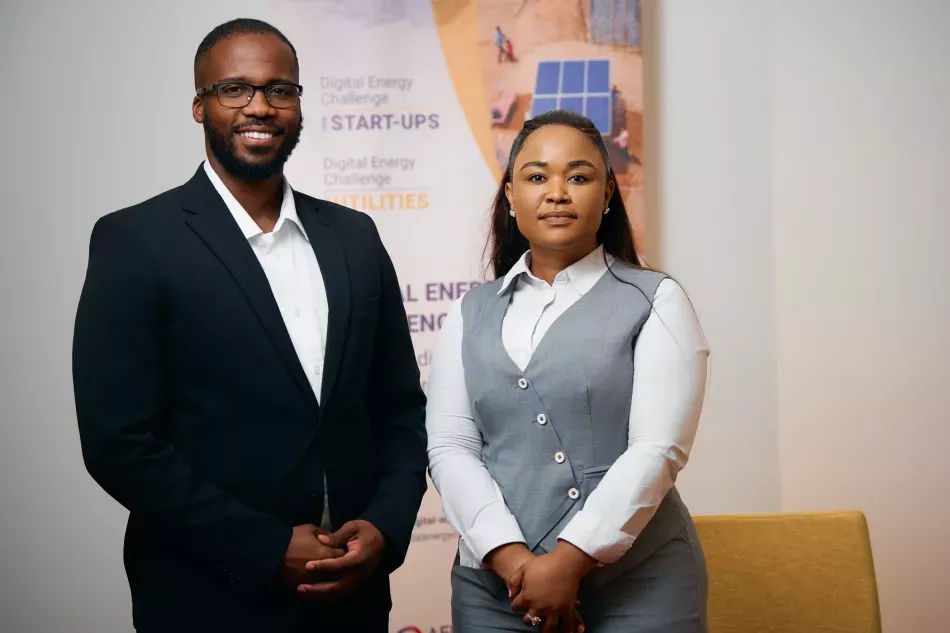
● Tumisang Kalagobe, Growth & Partnerships Executive, Plentify
● Sindile Buthelezi, Renewable Energy Manager, eThekwini Metropolitan Municipality
● Sbu Ntshalintshali, Project Officer – Public Private Partnerships, eThekwini Metropolitan
Municipality
🌍 Country
South Africa
⚡ Energy Sector Segment
Grid stability, demand response, residential energy management, renewable energy integration (solar PV)
🧠 Key Technology(ies)
AI-driven demand forecasting, IoT device management, Home Energy Management System (HEMS), Virtual Power Plant (VPP), Time of Use optimisation
📊 Status
Early pilot
Hero
Company Overview
Plentify is a South African company redefining home energy management with its intelligent HEMS, powered by SolarBot and HotBot — IoT devices that retrofit onto solar inverters and electric water heaters to optimise household energy consumption. At the core of Plentify’s approach is the insight that over 70% of household energy demand can be shifted, decoupling when an appliance draws power from when it is used.
By harnessing this potential, Plentify’s AI-driven platform delivers load management services at a fraction of the cost of batteries, benefiting households, utilities, and the grid alike. Designed, developed, and manufactured in South Africa, Plentify’s flagship customers and partners span the full energy value chain: Balwin (South Africa’s largest residential property developer), Wetility (one of the largest solar rental companies in SA), BrightLight Solar (the largest residential solar developer and financier in SA), Herholdts (the largest solar distributor in SA), Conlog (the largest smart metering provider in Africa), the City of Cape Town (South Africa’s second-largest metro), retail banks FNB and Standard Bank, and eThekwini Municipality.
"This project will not only help us reduce our carbon emissions, but also our reliance on fossil fuels"
Challenge
What problem is being addressed?
South Africa’s energy landscape is undergoing a fundamental and irreversible shift. Eskom tariffs are set to rise by ~27% cumulatively between 2025 and 2028 — compounding decades of above-inflation increases that have already seen residential electricity costs surge fivefold since 2010. But cost alone is only part of the story. The liberalisation of South Africa’s energy markets is transforming the rules of the game.
Utilities and households that learn to manage their energy assets actively — shifting demand, integrating renewables, and participating in grid services — will be better positioned to reduce costs, improve resilience, and capture the value that the new energy system makes available.
Yet the boom in unmanaged rooftop solar is also creating new technical challenges: comeback load spikes when batteries recharge simultaneously after outages can negate an entire stage of load shedding, while the Duck Curve leaves peak evening demand unmet as midday solar goes to waste. Without intelligent coordination, the energy transition risks destabilising the very grid it was meant to fix.
Why this issue matters in the local energy ecosystem:
Without intelligent management of distributed energy resources, the very solar systems meant to solve South Africa’s energy crisis risk destabilising the municipal grid and deepening financial pressure on the utilities that communities depend on.
The Solution
What does the project do?
Project Smart Solar deploys 280 Plentify SolarBots and HotBots across households in eThekwini Municipality, creating a Virtual Power Plant that intelligently coordinates solar, batteries, and water heaters. The system shifts appliance energy use to align with solar generation, manages comeback load spikes following outages, and reduces consumption during peak Time of Use hours — protecting household budgets and the municipal grid simultaneously. Plentify’s HEMS connects all devices into a unified platform, enabling demand-side grid services at a fraction of the cost of batteries or diesel peaking plants.
What makes it innovative?
By aggregating distributed devices into a Virtual Power Plant and coordinating them with AI, Project Smart Solar delivers outcomes no single household can achieve alone: near-elimination of non-geyser peak TOU energy consumption without threatening energy security; coordination of inverters to eliminate comeback load spikes that currently negate entire stages of load shedding; flattening of maximum demand; crowding of morning peak energy into sunny midday hours and evening peak into early morning (fighting the Duck Curve); and doubling of solar energy usage — all without penalising participating households. Crucially, the project demonstrates that inverter load management is not merely a demand-shedding tool, but a critical enabler of a more reliable, affordable, and clean electricity system.
How It Works
Tools, platforms and data used
- Plentify HEMS cloud platform
- SolarBot (retrofits onto residential solar inverters)
- HotBot (retrofits onto electric water heaters)
- Real-time energy monitoring dashboard
- Data science and reporting pipeline
Technologies leveraged
- Artificial intelligence (demand forecasting and optimisation algorithms)
- IoT device management
- Virtual Power Plant aggregation
- Time of Use scheduling
- Cloud-based analytics
Who uses it
- Participating households in eThekwini Municipality, including lower-income residents, vulnerable populations, and municipal facilities
- eThekwini energy officials, who receive experiment findings and load management insights to inform policy
Examples of field applications
- Comeback load management: smoothing grid recovery after outage events by staggering battery recharge
- Load reduction: shifting consumption away from peak Time of Use periods to lower-cost, lower-carbon windows
- Solar load building: aligning water heater and appliance use with solar generation peaks to address the duck curve
- Water heating scheduling: optimising water heating to coincide with maximum solar output, reducing grid draw
Impact on the Ground
Tangible impact on users, operators, or the energy system:
The project targets measurable reductions in peak demand and comeback load spikes across 280 participating homes, delivering household electricity savings while reducing strain on eThekwini’s distribution network, extending infrastructure lifespan, and protecting municipal revenue streams. Building on Project Smart Geyser results, households can expect savings of over R300/month without compromising energy security.
Contribution to digitalization, efficiency, access, or resilience:
By digitally coordinating distributed energy assets into a Virtual Power Plant, the project enhances grid resilience, increases the feasible uptake of rooftop solar, and demonstrates how data-driven demand management can protect the municipal revenue streams that fund essential services for all eThekwini residents.
Key figures:
- 280 homes to be enrolled across diverse household categories;
- €251,100 total project budget (excl. technical assistance);
- 20 local youth to be trained alongside installation technicians;
- 3 grid services to be validated — comeback load management, load reduction, and solar load building
Results so far
The project has completed its foundational phase: experimental design is finalised, the project is fully scoped, and the tripartite agreement between Plentify, eThekwini Municipality, and AFD/AETS has been signed. The project is now in the process of mobilising for citizen and installer recruitment, which will mark the beginning of active deployment.
The initiative builds directly on Project Smart Geyser — Plentify’s landmark 30-month collaboration with the City of Cape Town and Hessequa Municipality, funded by EEP Africa and the GIZ, which independently validated up to 80% reduction in peak TOU energy consumption, up to 60% reduction in maximum demand, and household savings exceeding R300/month. Those findings have already been shared with AMEU, Eskom, NECOM, and the Ministry of Electricity, establishing a strong foundation for this next phase.
What’s next
Once recruitment is mobilised, installer training and citizen onboarding will run in parallel, followed by device installations across the 280 participating homes. Load management services will then be activated, initiating a 12-month live experiment validating comeback load management, load reduction, and solar load building at scale. Following the research and analysis phase, eThekwini Municipality will evaluate the feasibility of a full-scale rollout — with findings to be shared with AMEU, Eskom, NECOM, and the Ministry of Electricity to inform national replication.
Discover the eThekwini website
Discover the Plentify website